Paying Super After the Clearing House Closure: A Small Employer's Guide
Key takeaways
- The Small Business Superannuation Clearing House has let small employers pay all staff super in one payment, and with it closing, employers need another way to pay super.
- Knowing how to pay super now mostly means paying it through your payroll process rather than a separate ATO service.
- Payday Super began on 1 July 2026, so super is paid at the same time as wages rather than quarterly.
- Most payroll software can pay super directly through a SuperStream-compliant method, so you do not need a separate clearing house.
- Paying super on each pay run has a cash flow impact, because the money leaves the business more often than a quarterly amount.
- Easy Business App handles super as part of payroll, so it is calculated and paid when you run a pay.
For years, many small employers have used the Small Business Superannuation Clearing House to pay their staff's super in one go. With that service closing, and with Payday Super changing when super has to be paid, a lot of small business owners are asking the same thing: how do I pay super now? This guide walks through what is changing and what to do about it.
What the clearing house did
The Small Business Superannuation Clearing House, run by the ATO, let small employers pay all their staff super in a single payment, which was then distributed to each employee's fund. It was free and widely used, which is why its closure matters for so many small businesses.
The clearing house is closing, so small employers who have relied on it will need another way to pay super. Check the ATO website for the exact closure date and timing so you can plan ahead.
How to pay super without the clearing house
The good news is that paying super is still straightforward, it just moves into your payroll process rather than a separate ATO service. In practice, how to pay super for employees now looks like this:
- Your payroll system calculates the super owed on each pay run
- It is paid to each employee's fund through a SuperStream-compliant method
- The whole thing sits alongside your normal pay process
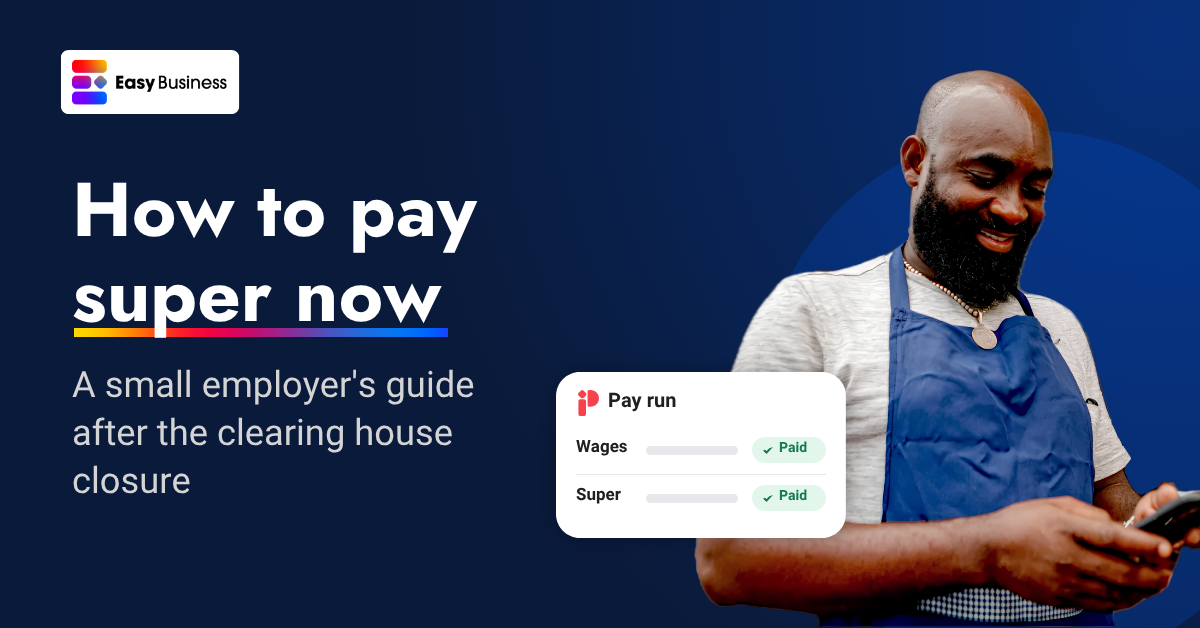
Most payroll software includes a way to pay super directly, so you do not need a separate clearing house at all. The super is worked out when you run payroll and sent to the funds from the same place.
Payday Super changes the timing
The other change to be aware of is Payday Super. Payday Super began on 1 July 2026. Super now has to be paid at the same time as wages, rather than quarterly.
Under the old approach, many businesses set super aside and paid it each quarter. Payday Super means it goes out with every pay run. For cash flow, that is worth planning for, because the money leaves the business more often rather than building up as a quarterly amount.
What small employers should do now
To stay on top of super after the clearing house closes, a few steps help:
- Make sure your payroll system can pay super directly through a SuperStream-compliant method
- Move to paying super on each pay run, in line with Payday Super
- Plan your cash flow around more frequent super payments
- Keep each employee's fund details up to date so payments are not rejected
- Check the current super guarantee rate on the ATO website so you are paying the right amount
Making the switch easy
The closure of the clearing house sounds like a hassle, but for most small employers it simply means paying super through payroll instead of a separate service. With the right software, that is one less thing to think about.
Easy Business App handles super as part of payroll. When you run a pay, the super is calculated and can be paid to your employees' funds, in line with Payday Super, without a separate clearing house. Payroll starts at $14.95 a month, with super and Single Touch Payroll built in. If the clearing house closure has left you wondering how to pay super, see how it works at easybusinessapp.com.
Frequently Asked Questions
- What is happening to the Small Business Superannuation Clearing House? The Small Business Superannuation Clearing House, run by the ATO, is closing. Small employers who have used it to pay staff super in one payment will need another way to pay super. Check the ATO website for the exact closure date.
- How do I pay super for employees without the clearing house? How to pay super for employees now usually means paying it through your payroll system, which calculates the super on each pay run and pays it to each employee's fund through a SuperStream-compliant method. No separate clearing house is needed.
- What is Payday Super? Payday Super began on 1 July 2026. It requires super to be paid at the same time as wages, rather than quarterly, so super goes out with every pay run.
- How does Payday Super affect cash flow? Because super is paid on each pay run rather than built up and paid quarterly, the money leaves the business more often. It is worth planning your cash flow around more frequent super payments.
- Does Easy Business App pay super? Yes. Easy Business App calculates super as part of each pay run and can pay it to your employees' funds, in line with Payday Super, without a separate clearing house. Payroll starts at $14.95 a month.